Check this out!
– Works In Progress –
We are all works in progress, eh?
I know I’ve brainstormed on no less than five projects during the last few weeks. But, each time I say them out loud or bring them to a meeting w/Steve or Matt they just don’t seem “quite right.”
This weekend I wrote a 15 page paper about “Oral Histories,” but it ended up not being to my liking. This class however, I do like.
Perhaps that’s why I’ve spent so much time experimenting.
Here is a project report.
I only have one more day to see what I’m going to pitch — I promise to ONLY pitch one!
But, if anyone has feedback I WOULD BE TOTALLY GRATEFUL.
PROJECTS:
PITCH 1.
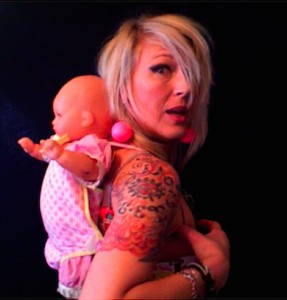
PROJECT – Mapping Electric Mommyland [Link to project posted on my BLOG]
As part of my thesis I trace the efforts of Mom Rockers across several continents–as they play instruments, write songs, and create community. I argue this community metamorphosed into “everything mom” recognized today in the context of “mommy bloggers,” “The Housewives of Beverly Hills,” and “Rita Rocks,” among other things. The movement formed organically as a source of empowerment and connection, in the late 1900s. Within four years an assimilation process began. By 2006 motherhood was being used to sell everything from sex, to diapers and dishwashers. The purpose of my thesis, “Electric Mommyland; Writing History Through Ethnographical Art and Music Performance Towards a Deeper Understanding of Everything Mom,” is intended to mark a time in history, when HER-story was on the rise. This project was inspired by RaveArchive and the aim would be to exhibit aspects of MOM music, culture, and history in an interactive digital format.
Article: http://www.bbc.co.uk/news/magazine-15625457
– OR –

PITCH 2.
CUNYspeaks!
Communication between students at the Graduate Center can be challenging. Blackboard is not an interactive technology. Students can find access to resources in multiple locations but not have good tools to correspond with each other outside the classroom. I propose a project that standardizes an Academic Commons web template, and puts it in the hands of even the most technologically challenged group. These will be called CUNYspeaks! websites and they will allow every student, within every class, to interact with each other. I built a sample experimental website here: [LINK]
– OR –
PITCH 3
CUNYspeaks!
The Graduate Center currently has no repository for oral history. Inspired by the New York Public Library initiatives, and the Columbia University Archives, I argue that the Graduate Center should do more to capture the passionate and authentic voices of the distinguished professors, staff, and students who comprise it. CUNYspeaks! will introduce students to the Graduate Center by way of an oral history project that situates itself within the larger New York community. I built a sample oral history page here: [LINK]
Oral History Research: NYPublic Library http://oralhistory.nypl.org/
– OR –
PITCH 4
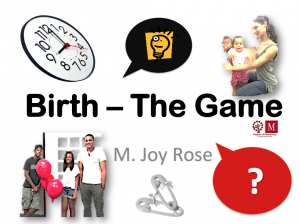
PROJECT – Birth; The Game
Birth; The Game is an online game that engages users in a pre-and post-conception interactive journey. Players are prompted to answer questions and make decisions that lead to unexpected outcomes. Birth the game is meant to educate users about the facts of life while inspiring them to engage in thoughtful responses. Gamers are linked to texts, images, academic interdisciplinary perspectives, and real-life resources. These are designed to enhance intersections between contemporary academic discourse and users within the sciences, arts, and history of birth and caregiving. Designed as an app and as interactive web portal meant to increase digital assets in the area of biology, history, sociology, economics, feminism, and “Mother Studies;” Birth-The Game aims to increase public engagement. The aim is to make this information widely available, accessible and appealing, in a fun, collaborative way as it pertains to human births, animal births, and the Digital Humanities. I built a sample experimental website here, but did not finish it: [LINK]
It is now possible to have a virtual baby online. This weekend I registered for an embryo that is now growing in/on my cell phone, and signed up to play “Virtual Families.
Great example: http://www.ardeaarts.org/birthBeta/
Better Birth through Games Book Sources: http://www.igi-global.com/article/better-birth-through-games/93028, Digital Birth: http://citris-uc.org/health/project/digital-birth, http://www.nucleuscatalog.com/normal-vaginal-birth-childbirth/view-item?ItemID=1614
-OR-
PITCH 5
PROJECT – Conferences in a Box or ConferenceCommons.org
How many times have you gone to an academic conference, met lots of great people and heard amazing presentations? Then—poof; its over, without a trace. Conferences in a Box is envisioned as a complete web-package resource that hosts and posts attendees names, contact information, presentation titles, social media feeds while directing twitter feeds throughout the event. It will also archive power-point presentations, and offer live-feed video through a password-protected portal post-event. Streamlining content, increasing availability, and preserving access to materials and resources, are the goals of this offering. By using new digital modes of publication Conferences in a Box hopes to set a higher bar for the dissemination of humanities scholarship.
Example: ER&L (http://electroniclibrarian.org/conference-info/, http://www.psav.com) not well maintained. Only includes one conference. I would hope to have a site like HASTAC that is ONLY all about conferences.
Final Cuts Part 1: Cellphones and Jesuits
Right now I am working on re-shaping my final project and possibly taking a new approach that takes a more curatorial/archival approach to the preservation of fan publications related to events and conventions.
But for my first attempt I tried writing about more contemporary issues along with dwelling on the morality of DH, but grew frustrated with trying to figure out a direction for the paper to go in. When I showed what I had written to a friend, they said that it felt like two different papers, so that’s how I’m presenting what I’ve done so far to you. I might re-work these segments to be part of the final paper, but I’m still mulling that over. For now though, here’s part one.
Convergence Culture by Henry Jenkins, is a book released in 2006, and it feels very present while also being part of a major pre-Twitter era of social interaction through the lens of communication technology. It covers the convergence of old media, new technology, and social media at its infancy. It was written at a curious point just before the explosion of Twitter, which has gone from that thing old people hated because it limited how many characters are used in a sentence, to a lifesaving tool, PR machine, and government communication tool all in one. It opens with our intrepid author recounting his experience trying to find a mobile phone that was purely a phone. The iPhone would not make its debut until a year after the publication of this book. “[I] wasn’t interested in something that could show me movie previews, would have customizable ring tones, or would allow me to read novels.” He goes on to explain that such Spartan phones have only recently vanished from the marketplace due to lack of demand. During my Thanksgiving break from classes I had a chance to meet up with some old high school friends. One of them is currently an accountant and making a decent living, but rather than using a contemporary smartphone, he uses an old style flip phone, which some of my friends refer to as a “burger-phone.”
“The only people that use burger phones [by choice] are drug dealers, crooked cops, or cheating on their wives!” my other friends chided. This could be seen as a typical anecdote about Christmas season haves-and-have-nots or being a modern day Luddite. But it also frames a very interesting perspective on giving connectivity a moral stance. True, older flip phones did have internet functionality. You could browse some websites, play some games, check your email, and buy some ringtones (a lucrative market according to Jenkins in 2006), but all in all their connectivity was fairly limited. Meanwhile today’s phones use wireless internet, and have a never ending supply of social media apps, programs that make keeping track of tickets more efficient, electronic wallets, camera and more. If the only people that want to be off the grid are crooks or the unfaithful, than that means connectivity, and therefore owning a smart phone to foster that connectivity, is a virtue.
Since I had gotten a Jesuit education at Fordham University for my undergrad study, I took a small shred of pride in the fact that the father (in more ways than one) of Digital Humanities was Roberto Busa. Though I do not recall many memories of Fordham being particularly technologically advanced while I was there. In fact the internet speed was rather dreadful. But on a recent excursion to my alma mater for a reunion I saw that one of the old dorm buildings had now been converted into a sort of stock exchange and commerce information center. Pristine glass walls (perfect for showing off what’s within) surrounded a room filled with row after row of computers running Windows 8 while a large monitor at the head of the room displayed a map of the world along with various charts and infographics and a stock ticker lined the ceiling like stripe of fluorescent icing on a cake. Thinking back to my mandatory class readings on spirituality, I recalled the story of John the Baptist, he who lost his head to Salome, wandering through the wilds and subsisting on honey straight from the hive. Goodness and piety was seen as something removed from society that we must seek out. But since the 17th century the Jesuits have enjoyed a reputation for their predilections towards scientific discoveries and education (along with colonialism, religious persecution, and the usual gamut of Catholic controversies. I wonder if there’s such a thing as “digital colonialism”), that it adds to Father Busa being the first person to try and take St. Thomas Aquinas’ writing and move from the Illuminated Text to the punch card, and ultimately to the ether of ones and zeroes. Meanwhile social media has led to heightened social awareness and even a lifesaving tool while pundits claim it is only a tool of vanity. New data is being discovered from old artifacts, and hobbies have become gateways to political ideologies instead of being monastic and isolated affairs. Many laud computers because they are neutral. Ones and zeroes with no credo or prejudices. But the question I posit is whether or not the Digital Humanities can be considered a virtuous form of study and is there an inherent virtue in connectivity, the internet, and digital convergence?
Jenkins mention, with not un-due skepticism, how in the 90s it was predicted that convergence media and culture from the newly birthed internet would be the greatest sword ever wielded against media conglomerates, and that entertainment would become a cluster of cottage industries. Jenkins skepticism in 2006 was due in part to the dot-com bust that happened only a scant few years ago. I still have my own memories of the pets.com sock puppet being everywhere on TV in the early oughts, and then his fall from grace as he became a symbol for the over-eager dotcoms collapsing in on themselves (and now he’s just an old relic on YouTube). Now in 2014 we can see some of that come to fruition while in some ways the prediction has been subverted. Media conglomerates no longer have the same sway they used to, but it is hardly as if they have none. Now everyone wants to be part of their own cottage industry, particularly on YouTube, myself included.
My first attempt at a project was based on the social media platform tumblr. Like Livejournal before it, tumblr has emerged as the platform of choice for teens and twenty-somethings to espouse their day-to-day woes and tribulations. But added to the mix are throngs of artists, some professional, many not that gravitated towards the platform because of its lax content restrictions, as opposed to DeviantArt. My initial idea was based on the large amount of international users across tumblr. Many of them were artists working in some kind of cottage industry, selling prints, commissions, assorted tchokies with their art on them, or otherwise using tumblr as an extension and media presence for whatever industry they’re already in (journalism, comic books, translations). What I set out to do was to see if there is any kind of correlation between where tumblr users are located and where the people they in turn follow are located. I was hoping to find a great web that bound together finds of niche fandoms with content creators, and see how international borders now meant nothing. That is until I sought some input regarding my idea.
The critiques I received made me remember what a valuable currency information is. In Neal Stephenon’s novel Snow Crash (a sort of tongue-in-cheek counterpoint to William Gibson’s grim-n-gritty Neuromancer) the character YT is a fifteen year old courier that also makes her living as an information broker, collecting valuable data on just about anything she can get her hands on to sell to interested parties. The information I was seeking would indeed be an interesting way to connect the lines of fandom that have been used as a web to bring fans together for decades, but now such data would be considered a form of invasion of privacy or just another boon for advertisers.
Neatline Presentation
The Neatline Presentation by David McClure was very impressive. Learning how to add pictures and drawing explanations to your map is orality and textuality bridged into one. It is amazing to be able to really express the data in a way that anyone can understand. By using Neatline, I am able to reach a larger audience for my research. It tells a story by using popups to explain your picture when you hover over the area of the map. This will be really useful in future presentations. I am hoping to use this as a way to express my dissertation one day soon.
Stay tuned for the process that Cindy and I had to go through to get to the first part of our project using Neatline.
Selena
Data Visualization at its best
After listening to the presentations of Manovich, Jones ,the NYPL, and Scheinfeldt, attending the Fellows workshops on geospatial mapping and neatline, and seeing the presentations of several classmates, I began to see the light at the end of the tunnel. It was and still is a process. I am slowly visualizing my project in mapping form.
My visualization process flowed in this order:
First, the presentations of the experts helped to solidify the process. If you do not understand command line and other languages, it is best to find someone who has the background or the software that seems the most user friendly. Second, is making your project grant worthy for the funder. Third, is really delving in and playing around with the different programs to see which one better suits your project needs. After attending the Fellow workshops with Micki, Michelle and finally David Mcluren from Neatline, the very last one I might add. This is the one that seemed to present the best visualization that I am interested in for my research.
Cindy and I are working on a Data Project for our respective research projects and we have similar interest and so we are working together to hopefully present something that will one day receive funding.
Thank you for a well-rounded approach for the less tech savvy student.
Selena
Good Morning All,
This is my first blog post and I am sorry that I waited so long to do it. In the past I have been a bit of a tech phobe. I was inspired to take this course because I am one of those people that likes to challenge myself and learn new things. I must say that up until this point I was trying to figure out how my social work background and now Phd Urban education lens fits in in the digital humanities world. Yesterday’s NYPL lab visit, coupled with the Neatline workshop was when the light bulb finally went on for me in all of this. I have been amazed by the readings, presentations and your visualization projects and kept thinking when the heck is this going to make sense for me.

Aha! I finally got it!
The oral history digital project naturally caught my attention as I have been professionally trained and always innately intrigued by people’s life story and trajectories. Immediately I thought about how I might pursue my digital humanities project proposal as I feel that the communities that are impacted the most by social-political inequities and injusticies are sometimes far removed from data and research theories. To that end, I am always thinking about ways in which all of this great data may be accessible and available to those of us who have a tech phobia or just don’t have the time or the jargonese to read through pages and pages of journal articles, blogs, newspaper articles and the like. I may have found a way. David McClure did an amazing job of explaining the software and its uses and walked us trough the process and I was so excited. It felt like that first time you learn how to ride a bike; that moment when some pushes you from the back and lets go and then you suddenly realize that they have let go and that you are doing it on your own! Yes, that feeling. I am on my way and a work in progress.
Selena and I are working on a mapping project which I will share in a later blog but I wanted to share with you all that I have finally gotten how I might use digital humanities in my work as a social worker, an educator and researcher. Thank you all for sharing of your journey and normalizing the challenges. More to come soon!
NYPL Labs visit
Yesterday’s visit by NYPL Labs was inspiring. What we discussed today was mostly discussed before in the semester, but it was refreshing to hear it from non-academics, DH practitioners who carried a passionate and playful tone (though still obviously knowledgeable) that wasn’t over-analyzing/intellectualizing/rehearsed (that’s not to say that our previous guests were). Josh (?) was almost poetic in describing how they aimed to “breathe life into the collection” and save it from being “frozen in amber.”
As I mentioned in class, I’m proposing a project of digitizing an series of installations curated by the APA Institute at NYU. I’ve been tackling some methodological and theoretical issues that we luckily addressed, mostly on the original consumption of the archive, observer’s experience of serendipity, and how to address what is not represented.
- What was the original intended consumption of the archived object and how do we translate it something that is native to digital? Johanna Drucker addressed this in her critique of eBooks, which “often mimics the most kitsch elements of book iconography” and in doing so we only stimulate “the way a book looks” (Drucker, 2008, 216-217) and not thinking about how it is used and how we can extend that type of thinking to the digital environment. The NYPL Labs had a creative take to this question with their 3D images site, http://stereo.nypl.org/.
- How do we recreate the experience of accidental discovery/serendipity in the digital space? During Kathleen Fitzpatrick’s visit, she spoke about the technicality of this, by collecting metadata and tagging. In Planned Obsolescence, she delves a more into looking at the structure of the original material and the digital environment, going beyond the ink to pixel conversion. The NYPL Labs guys echoed the same notion about structure, that a serendipitous discovery is surprising but not random because the data belongs in a structure and it is transparent how you arrived at your discovery. But they also questioned if this recreation of serendipity is in the power of the creator.
- Stating your limitations of your project. Like scientists, we should the boundaries of our experiments, noting what was specifically included and excluded so it is not assumed that the results reflect all data (whatever that means). In the world of google and wikipedia, we need to be mindful of the constant creation and revision of knowledge. Even with tools for data scraping, we still need to question what is being left out and why.
They shared some great links. Here are some that I noted in case you wanted to revisit:
- http://digitalcollections.nypl.org/
- http://archives.nypl.org/terms/
- http://stereo.nypl.org/
- http://menus.nypl.org/
- http://dp.la/
- http://cs.stanford.edu/people/karpathy/deepimagesent/
- http://friendsinspace.org/
Drucker, Johanna. 2008. “The Virtual Codex from Page Space to E-space.” In A Companion to Digital Literary Studies, ed. Susan Schreibman and Ray Siemens, 216-32. Oxford: Blackwell.
Prelinger Archive ephemera video archive
Computer graphics video: https://archive.org/details/0425_Incredible_Machine_The_00_01_07_00
Social Citation
Hi All,
It’s so exciting to see the progress on this blog; I know so many of us are now able to do things we couldn’t at the beginning of this class, thanks in no small part to all the great workshops. My final project is largely facilitated by the Gephi workshop. In this post I want to share my process in case it’s useful to anyone, but also, crucially, ask for your help to bring it to life. In case this gets long I’ll say now that in the final two weeks of class I hope to ask the praxisers to complete the short (and fun!) exercise of mapping your favorite authors, as well as the people who helped you discover them, in a simple text file. Now into the weeds! (ps I will be more specific when I ask this in earnest).
My goal here is to make the citation process more social, to draw the connections between impactful texts/authors and the friends, partners, mentors, teachers, scholars, family etc. that helped you discover the content. I began with a basic tab delineated text file that looked like this: 
the categories here from right to left are: author, my person, relationship, location. I didn’t get too hung up on the content, just typed what came to mind for maybe 15 minutes. It took a bit of tinkering to figure out how to show this in Gephi, but eventually I got this:
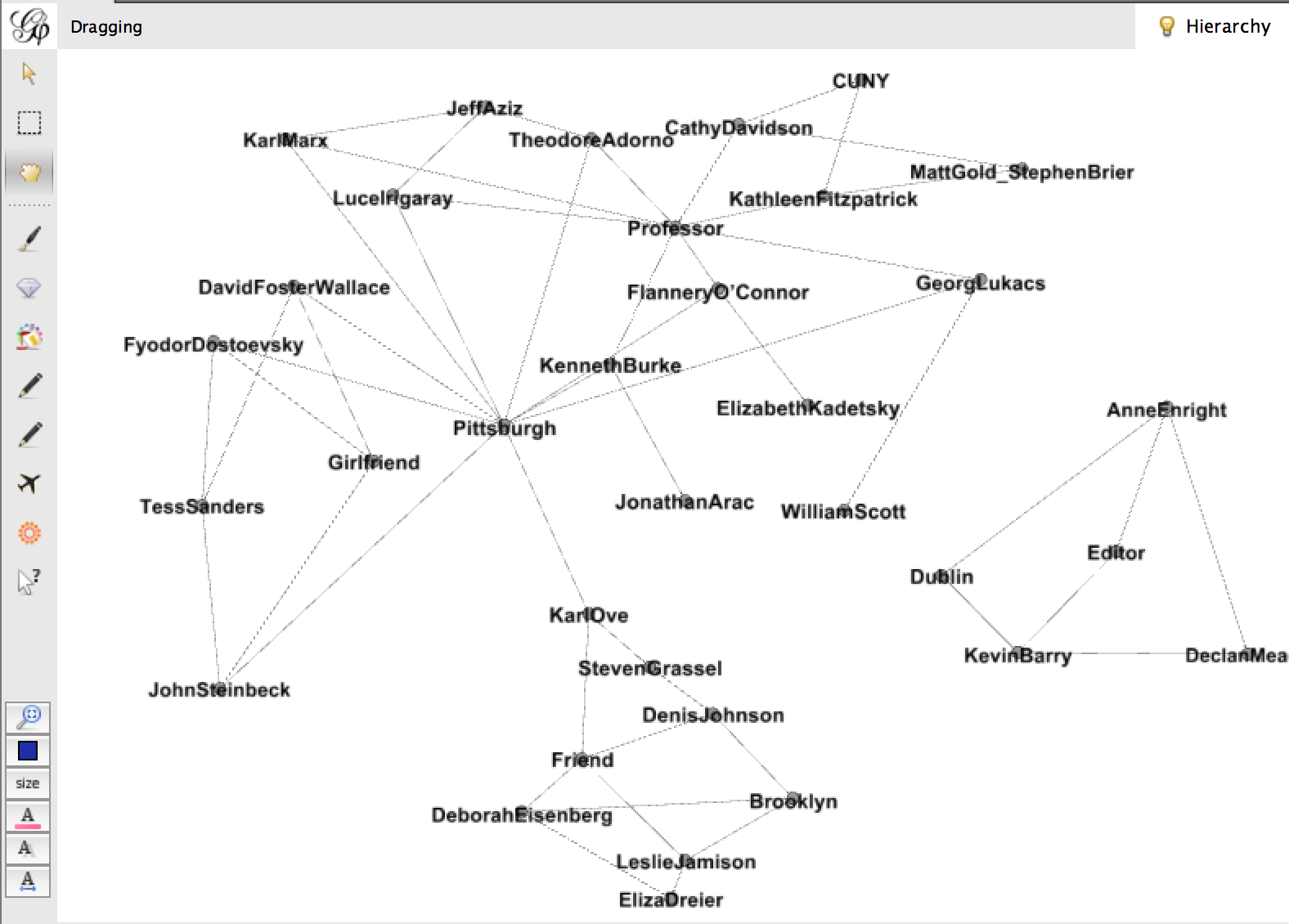
Sorry if this is hard to see, but this is a very messy graph. There are some interesting things going on – the connections are by relationship and location, and they create pockets. Declan Meade is off on his own to the right because he’s the only Dubliner and the only Editor I have. I tried to make this a little more cohesive by changing my data to look like this: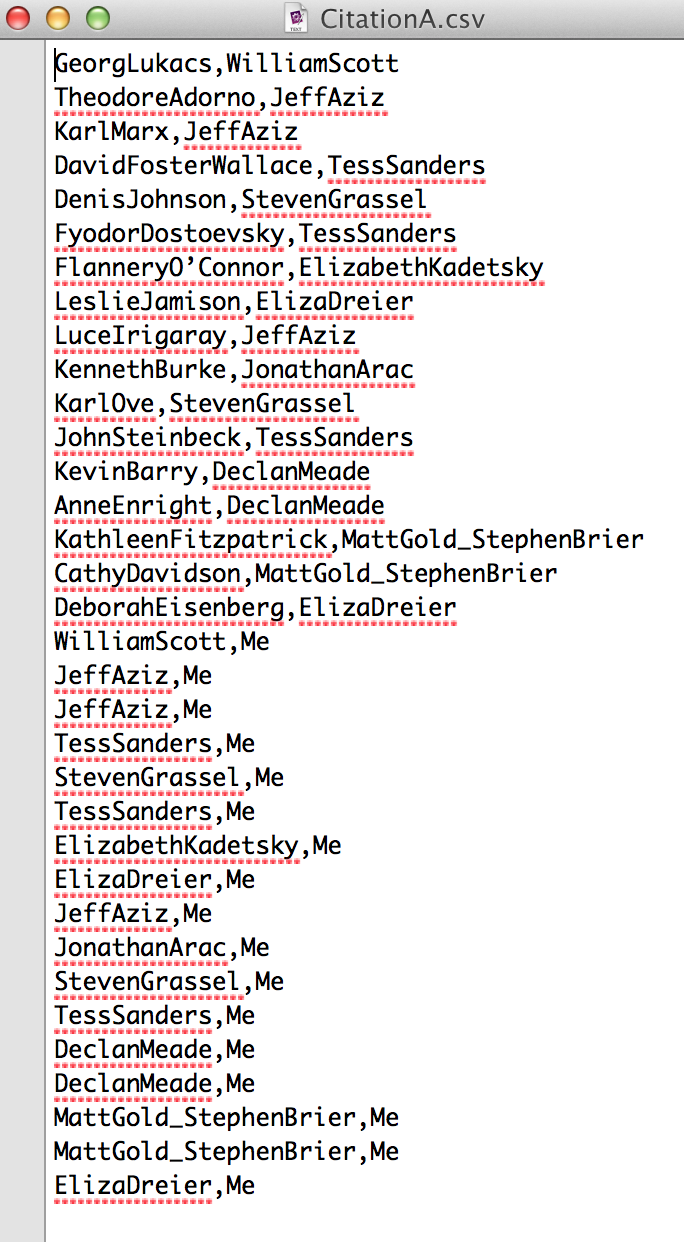
So I got rid of relationship and location, I also made it a one-to-one relationship between everything, where “Me” was connected to each of my people, and each of my people were connected to the work they’d introduced me to. Then the graph changed to this:
This sacrificed some of the nuance of place and relationship, but it gained a simplicity that I think is critical in these visualizations to make sense at a glance.
I’m not sure whether I’d like to add in relationship as a node, or maybe offer it as a hover or something. (color coordinate edges with a key linking them to relationships??) I have more playing to do, and would love feedback. But I think this project gets way more interesting when “Me” is connected to “You”. And so I wonder if folks would be willing to participate in this exercise. I think we can all safely use the three print texts assigned in this course, creating a link between everyone. I’ll finalize the model over the weekend, to have a more developed request for you, but I think the easiest thing would be for me to set up a google doc with everyone’s name on a separate page and ask you to type out the data. It’s important to the project because only YOU know these things – there’s no way to scrape this. Thanks for your consideration, and looking forward to NYPL Labs tomorrow!
Wittgenstein Source
I’ve been reading some Wittgenstein for another course, and his writing seems organized specifically for the purposes of DH — so I poked around to see what people have done. Found this remarkable website out of University of Bergen — after playing with a number of wordpress sites (for myself/roommate/sister), I found the navigation really cool. It’s also impressive in terms of archiving material. (At the library’s ProQuest presentation this week about dissertations, the idea of hard copy microfilms housed deep in a Pennsylvania mountain legible with a candle and a magnifying glass brought me back around to the zombie apocalypse mentality of outcome planning).
http://www.wittgensteinsource.org/
Just wanted to share.
-Jojo

